Operations
The Operations tab controls what the public can access, how creators pay and verify their identity, how automatic communication works, and when the event windows open and close.
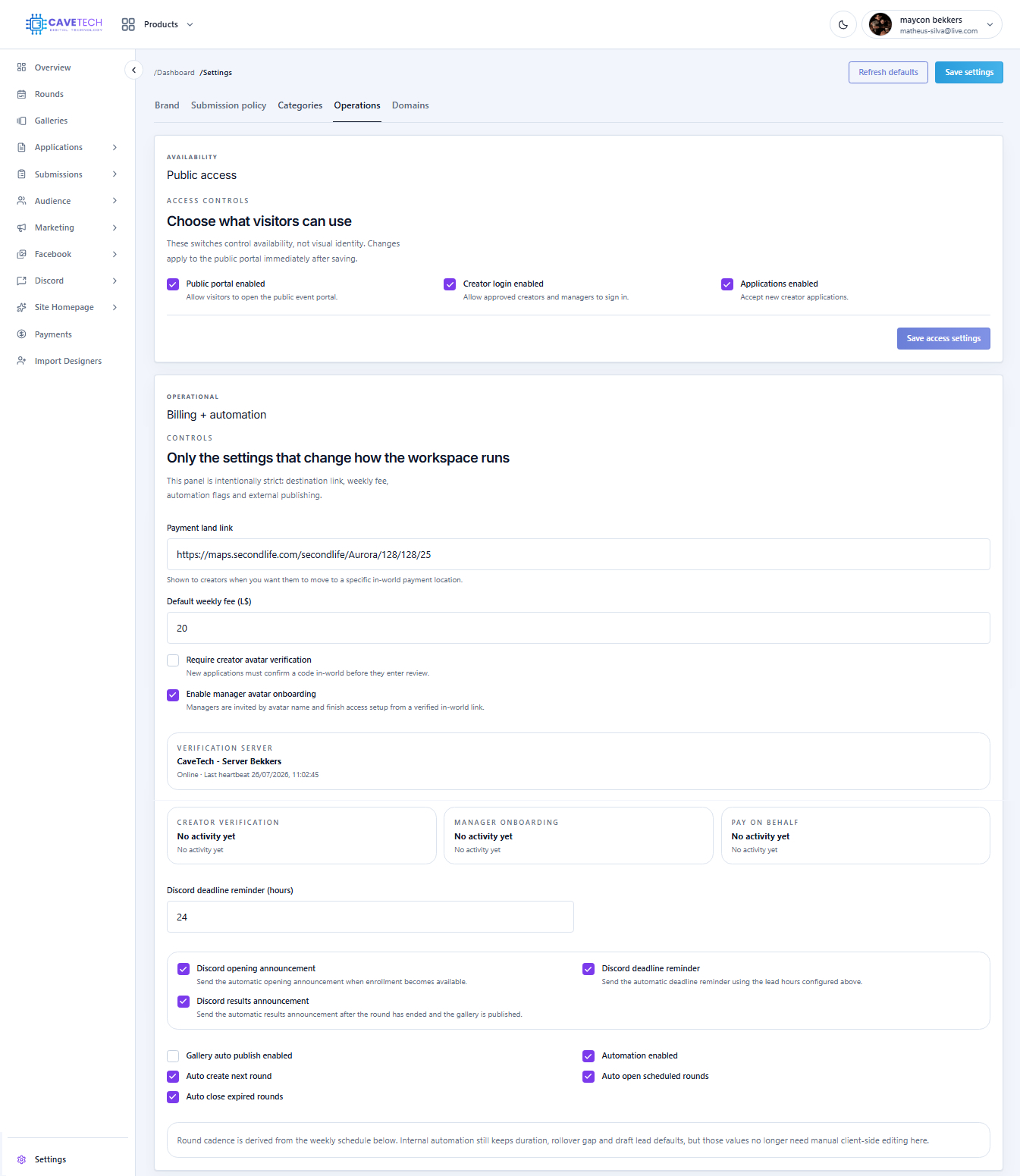
Public access
These switches control availability, not visual design. Changes apply to the public portal after saving.
Public portal enabled
Allows visitors to open the public EventSale portal. Turn this off when you need to temporarily hide the public event while preserving the workspace and its data.
Creator login enabled
Allows approved creators and creator managers to sign in to the workspace portal. Turning it off prevents creator-side access even when creator accounts remain stored.
Applications enabled
Allows new creators to send applications through the public application page. Turning it off stops new applications while keeping existing approved creators and submissions available to the team.
Use Save access settings inside the Public access card after changing these switches.
Billing and identity controls
Payment land link
The Payment land link is the Second Life location shown to creators when they need to move to a specific payment area. Use a map URL that your creators can open and access.
Default weekly fee (L$)
This is the default amount associated with a new weekly round. It gives the event a starting fee for creator enrollment; review the actual round before opening payments.
Require creator avatar verification
When enabled, a new applicant must confirm a verification code in Second Life before the application enters review. This helps the event team connect the application to the avatar that submitted it.
Enable manager avatar onboarding
When enabled, creator managers can be invited by avatar name and complete their delegated access through a verified in-world link.
Verification status and activity
The Verification server card is read-only. It shows the registered EventSale verification object and its health/last heartbeat. This is not an input; it tells you whether identity flows have an active in-world connection.
The activity cards show the most recent:
- Creator verification event;
- Manager onboarding event; and
- Pay on behalf delegation event.
These cards are operational evidence, not settings. If the verification object is not registered or has no recent heartbeat, check the in-world object before asking creators to verify.
Discord reminders
Discord deadline reminder (hours)
This number controls how many hours before the enrollment deadline EventSale sends the Discord reminder, when that reminder is enabled. Use a positive lead time that gives creators enough time to finish their submissions.
Discord opening announcement
Sends an automatic Discord announcement when enrollment becomes available for a round.
Discord deadline reminder
Sends the automatic deadline reminder using the lead time above.
Discord results announcement
Sends an automatic results announcement after the round has ended and the gallery has been published.
These automations require a healthy Discord connection and configured templates/channels in the Discord module.
Gallery and round automation
Gallery auto publish enabled
Allows the gallery automation to publish when its configured publication conditions are met. Leave it disabled when the team wants to review and publish every gallery manually.
Automation enabled
Enables the workspace scheduler and its automatic operational actions. Disable it only when you deliberately want to operate the round windows manually.
Auto create next round
Creates the next round according to the workspace cadence after the current round reaches the rollover point.
Auto open scheduled rounds
Opens enrollment when a scheduled round reaches its configured opening time.
Auto close expired rounds
Closes a round when its configured enrollment or event window has expired, according to the scheduler rules.
The Refresh defaults action in the page header recalculates workspace defaults from the existing history. It does not erase your event data.
Schedule windows
All schedule fields use official Second Life time in the America/Los_Angeles time zone. Each window has a weekday selector and a time field.
Enrollment — Open and Close
These fields define when creators can enter or edit the round. Opening enrollment makes the round available; closing enrollment stops new entries and may lock edits depending on the Submission Policy.
Payments — Open and Close
These fields define when the payment period is available for the round. Use them to give creators a clear payment window before the event begins.
Event — Start and End
These fields define the public event period. They also affect submission edit locking when the policy is set to Lock on event start.
Saving Operations
Use Save settings in the page header to save billing, verification, Discord, automation, and schedule fields. Save the public access switches with Save access settings in their card. After saving, verify the next round's dates and check the dashboard health indicators.